Fit-Out in Dubai: The Complete 2026 Guide to Costs, Approvals and Contractors
Hundreds of companies in Dubai call themselves fit-out specialists, and two quotes for the same space can describe completely different jobs. Here is the complete picture: types of fit-out, real costs per square foot, approvals, timelines and how to choose the right fit-out company.
13 October 2026 · 13 min read · K4 Fit-Out Studio
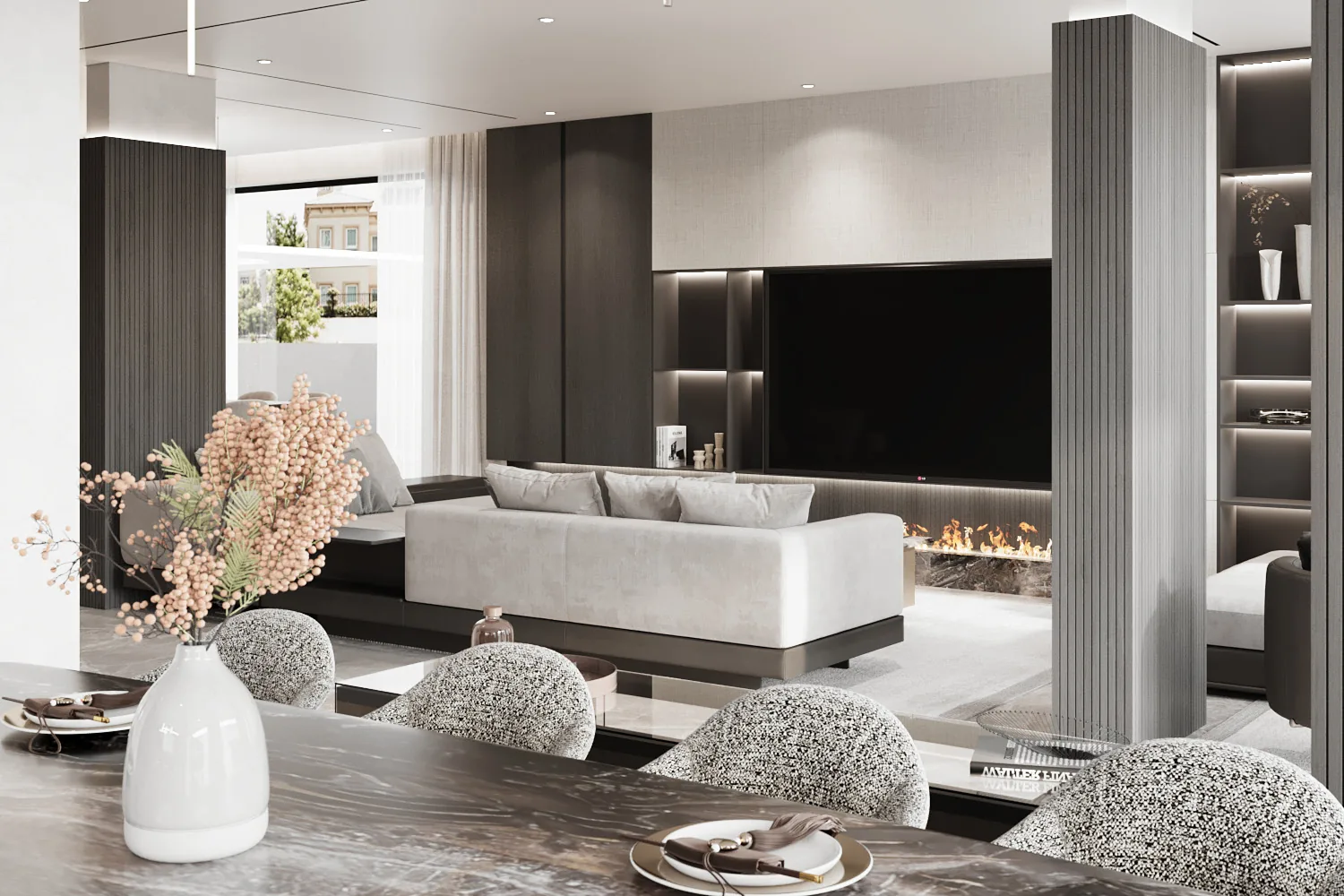
Fit-out in Dubai is one of the busiest construction markets in the world. Every year, thousands of villas, apartments, offices, shops, clinics and restaurants are handed over as shell and core, or bought and stripped back for renovation, and every one of them needs an interior fit-out before anyone can live or work in it. The result is a market with hundreds of registered fit-out companies, a wide spread of prices, and a great deal of confusion about what a fit-out actually includes.
This guide is written for owners, investors and tenants who want a clear, honest picture of fit-out in Dubai in 2026: what the different types of fit-out are, what drives cost per square foot, which authority approvals apply, how long a fit-out really takes, and how to choose a fit-out contractor you can trust. The figures come from projects K4 has delivered in this city, and every section links to a deeper guide if you want more detail.
What does fit-out mean in Dubai?
In Dubai, fit-out (also written fitout or fit out) is the work that turns an empty structure into a finished, usable interior. The building itself, its frame, façade, cores and main services, is delivered by the developer. The fit-out is everything inside: partitions, ceilings, floors, wall finishes, joinery, kitchens, bathrooms, lighting, air conditioning distribution, electrical and plumbing connections, fire and life safety devices, and the final finishes you see and touch.
The word is used loosely, which is the source of most disputes. Two fit-out companies in Dubai can quote for the same unit and be pricing genuinely different scopes. One may include design, authority approvals, MEP modifications and bespoke joinery; another may price only finishes and expect the client to manage everything else. Before comparing any two quotes, read our guide to what a fit-out scope actually includes and make sure both are pricing the same thing.
Shell and core, Cat A and Cat B
Commercial fit-out in Dubai uses three standard terms that every owner should know:
- Shell and core: the developer hands over the structure, façade, lift cores, main risers and common areas. The interior is bare concrete with services capped at the riser.
- Category A (Cat A) fit-out: the landlord’s base fit-out. Raised floors or screeds, a basic suspended ceiling, primary air conditioning, standard lighting and fire detection, so the space is lettable but not yet tailored to a tenant.
- Category B (Cat B) fit-out: the tenant’s fit-out. Partitions, meeting rooms, kitchens and pantries, branded finishes, specialist lighting, data and AV, and any changes to the Cat A services needed for the new layout.
Residential fit-out does not use the Cat A and Cat B language, but the logic is the same. A villa bought from the developer may be fully finished, partly finished or shell, and a villa fit-out starts from whatever condition the property is in.
The main types of fit-out in Dubai
Fit-out in Dubai splits into a handful of distinct markets. Each has its own approvals, its own risks and its own cost range, and the right fit-out contractor for one is not automatically right for another.
Villa fit-out
Villa fit-out covers everything from refreshing finishes in an existing home to a full strip-out, structural change and rebuild of the interior. In communities such as Palm Jumeirah, Emirates Hills, Jumeirah Islands and Jumeirah Golf Estates, a luxury villa fit-out typically includes new layouts, bespoke joinery, natural stone, upgraded MEP, home automation and landscape. Approvals come from the master developer and Dubai Municipality or Trakhees, depending on the community. Our five-phase villa renovation guide walks through the full process.
Apartment and penthouse fit-out
Apartment fit-out in Dubai is shaped by the building more than by the design. Building management approval, floor-loading limits, shared MEP services, working hours and service lift bookings all set the rules before a designer draws a line. Our guide to what to plan before an apartment fit-out covers the constraints in detail, and penthouses add their own challenges around structure, terraces and logistics.
Office fit-out
Office fit-out in Dubai is usually a Cat B fit-out in a commercial tower or business park, often on a fixed lease start date. Speed, landlord approvals, Civil Defence sign-off and DEWA load changes drive the programme. See our office fit-out cost guide for current price ranges.
Retail, restaurant and F&B fit-out
Retail and restaurant fit-out in Dubai is the most approval-heavy category. Mall landlords run their own design review on top of Dubai Municipality, Civil Defence, DEWA and, for food outlets, Food Safety. The kitchen extract, gas, drainage and fire suppression usually decide the budget and the opening date. Read restaurant and retail fit-out approvals and programme before signing a lease.
Clinic and healthcare fit-out
Clinics, dental surgeries and medical centres need DHA-compliant layouts, medical gases, infection-control finishes and specialist ventilation. They sit at the upper end of commercial fit-out cost because the MEP content is high and the tolerance for error is low.
Fit-out cost in Dubai: 2026 benchmarks
Fit-out cost in Dubai is quoted per square foot of treated area. The ranges below are all-in figures from K4’s own projects, covering demolition, civils, MEP alterations, finishes, joinery, project management and preliminaries. They exclude loose furniture, art, authority fees and landscape. The full breakdown is in our fit-out cost per square foot guide.
| Fit-out type | Good (AED/sq ft) | High (AED/sq ft) | Ultra-prime (AED/sq ft) |
|---|---|---|---|
| Apartment (1 to 2 bed) | 350 to 480 | 480 to 700 | 700 to 1,100 |
| Apartment (3+ bed) / duplex | 400 to 550 | 550 to 850 | 850 to 1,400 |
| Penthouse | 550 to 750 | 750 to 1,200 | 1,200 to 2,200 |
| Villa (existing layout) | 450 to 620 | 620 to 950 | 950 to 1,600 |
| Villa (structural change) | 600 to 800 | 800 to 1,300 | 1,300 to 2,500+ |
| Office | 220 to 320 | 320 to 480 | 480 to 750 |
| Restaurant / F&B | 400 to 600 | 600 to 900 | 900 to 1,500 |
| Clinic / medical | 450 to 650 | 650 to 950 | 950 to 1,400 |
To turn these figures into a working budget, multiply the rate by the treated area, then add 10 to 15% contingency and a separate line for furniture, fixtures and equipment. If the result is more than about 30% away from your budget, the fix is to change the specification or the scope area, not to look for a cheaper fit-out company at the same specification.
What drives fit-out cost
- Stone and finishes. Moving from porcelain to standard marble to book-matched Calacatta or onyx can triple a finishes budget on identical drawings.
- Joinery. Bespoke joinery is usually the single largest trade in a luxury fit-out, often a quarter to a third of the build cost.
- MEP changes. Moving kitchens and bathrooms, adding air conditioning zones or increasing electrical load adds cost and approvals.
- Ceilings and lighting. Coves, curves, shadow gaps and integrated lighting are slow, skilled work.
- Access and logistics. High-rise apartments, occupied buildings and restricted working hours all add time and cost.
| Package | Typical share of fit-out cost |
|---|---|
| Joinery & bespoke furniture | 22 to 30% |
| Stone, tile & flooring | 15 to 22% |
| MEP (electrical, HVAC, plumbing) | 14 to 20% |
| Civils, plaster, paint & ceilings | 10 to 15% |
| Automation, AV & lighting control | 6 to 12% |
Fit-out approvals in Dubai
Approvals are the part of a fit-out in Dubai that cannot be compressed or skipped. The exact list depends on the property and the scope, but most projects involve some combination of the following. Our guide to NOCs and permits explains who issues what, and in what order.
- Developer or landlord NOC: the master developer, building management or mall landlord must approve the works before anything else. For villas, see how to get an NOC for villa renovation.
- Dubai Municipality or Trakhees: the building permit for the fit-out. Which authority applies depends on the community; see the Dubai Municipality approval process and the Trakhees guide.
- Dubai Civil Defence: fire alarm, sprinkler, emergency lighting and exit changes. For commercial fit-out this is often the approval the opening date hinges on. Read Civil Defence approval for fit-out.
- DEWA: any change to the electrical load or distribution. See DEWA approval for fit-out projects.
- Other authorities: Food Safety for F&B, DHA for healthcare, and RTA or community rules for external works.
How long does a fit-out take in Dubai?
Fit-out timelines in Dubai depend on the type of project, the depth of the scope and, above all, the approvals. The figures below are typical construction durations once design is complete. Our fit-out timeline guide breaks them down by stage.
| Project type | Typical fit-out duration (after design) |
|---|---|
| Office Cat B fit-out | 8 to 12 weeks |
| Retail unit | 8 to 14 weeks |
| Restaurant / F&B | 12 to 18 weeks |
| Apartment fit-out | 3 to 5 months |
| Villa interior fit-out | 5 to 8 months |
| Villa with structural change | 8 to 14 months |
A straightforward Cat B office with no structural or major MEP change can clear Dubai Municipality review in under two weeks. Anything touching a building’s core drainage, structure or façade routinely takes four to six weeks, especially in occupied towers where an owners’ association NOC sits on top. The most reliable way to protect a fit-out programme is to order long-lead items, joinery, stone and specialist lighting, against frozen drawings the moment they are signed, in parallel with approvals. On our own projects, that single sequencing decision routinely saves three to four weeks.
The fit-out process, step by step
Whatever the project type, a well-run fit-out in Dubai follows the same sequence. Skipping or overlapping stages without control is where budgets and timelines slip.
- Brief and site survey. Agree what you want to achieve, measure the space and record its condition, services and constraints.
- Concept design. Layouts, mood boards and a first budget check. A strong design brief at this stage prevents most later changes.
- Detailed design and MEP coordination. Construction drawings, finishes schedules, joinery details and coordinated MEP layouts.
- Authority approvals. Developer NOC, Dubai Municipality or Trakhees permit, Civil Defence and DEWA, as required.
- Procurement. Order stone, joinery, fixtures and equipment against approved drawings and samples.
- Construction. Strip-out, civils, first-fix MEP, ceilings and partitions, second-fix, finishes and joinery installation.
- Testing, inspections and snagging. Authority inspections, commissioning of MEP and a structured snagging process.
- Handover. Completion certificates, operation and maintenance manuals, warranties and a clear post-handover contact.
Design and build fit-out vs traditional contracting
There are two main ways to buy a fit-out in Dubai. In the traditional route, you appoint a designer or consultant first, then tender the drawings to fit-out contractors. In the design and build route, one company designs and builds under a single contract. Each model trades different risks, and our comparison of design and build vs traditional contracting explains when each makes sense.
For most residential fit-outs, and for commercial projects with a fixed opening date, design and build reduces the gaps between drawing and delivery. The team that designs the joinery is the team that builds it; the engineer who coordinates the MEP is the one answering for it on site. When something goes wrong, there is one party accountable, not a dispute between consultant and contractor.
How to choose a fit-out company in Dubai
Almost every interior company in the emirate calls itself a fit-out company. Very few carry the licences, in-house trades and single-point accountability a full fit-out requires. Our detailed guide on how to choose a fit-out company in Dubai goes further, but these are the questions that separate the serious from the rest:
- Licences and insurance. Does the company hold the right Dubai trade licence for the work, and current contractor’s all-risk and public liability insurance?
- In-house trades. Which trades does the company employ directly, and which does it subcontract? Joinery, MEP and stone are the ones that matter most.
- Approvals experience. Can it name recent projects in your community or building, and walk you through the approvals it secured?
- Comparable projects. Can you visit or see completed fit-outs of a similar size, type and specification?
- Programme and payment terms. Is there a realistic programme, and are payments tied to progress rather than front-loaded?
- Warranty and aftercare. What defects liability period is offered, and who is your named contact after handover?
Be cautious of quotes that are dramatically lower than the rest, of companies that cannot show their own work, and of contracts that are vague about scope. Our list of red flags when hiring a contractor in Dubai is worth reading before any meeting.
Common fit-out mistakes to avoid
- Starting construction before approvals are in hand. Unapproved work can be stopped, fined and, in some buildings, reversed at the owner’s cost.
- Comparing quotes with different scopes. The cheapest fit-out quote is often the one that has left the most out.
- Changing the design during construction. Every change after procurement costs more and moves the programme.
- Under-specifying MEP. Air conditioning, electrical capacity and drainage are hard to fix once walls and ceilings close.
- Ignoring maintenance. Finishes that suit a showroom may not suit Dubai’s heat, humidity and dust over ten years.
Fit-out contracts and payment terms
A fit-out contract in Dubai should leave no room for interpretation. At minimum it should attach the approved drawings and finishes schedule, define exactly what is included and excluded, set out the programme with key milestones, and state the defects liability period and warranties. Variations should require written instruction and an agreed price before work proceeds.
Payment structure tells you as much about a fit-out contractor as their portfolio does. A typical structure is a modest advance, often 10 to 20%, followed by stage payments tied to measured progress on site, with a retention held until the end of the defects liability period. Be wary of contractors asking for large advances before approvals are secured or materials ordered. Our guide to contractor payment terms in Dubai sets out what is normal and what is a warning sign.
Fit-out by community
Where your property sits changes the fit-out as much as what you want to build. Each master developer and community has its own rules, approval routes and practical constraints:
- Palm Jumeirah: Nakheel approvals, salt-air exposure on external materials, and strict logistics on the fronds. See villa fit-out in Palm Jumeirah.
- Emirates Hills and Jumeirah Islands: large villas, structural change and high-specification interiors. See Emirates Hills and Jumeirah Islands.
- Jumeirah Golf Estates and Sienna Lakes: villa renovations and extensions within community design guidelines. See Jumeirah Golf Estates.
- Downtown Dubai and Dubai Marina: high-rise apartment and penthouse fit-out under building management rules. See Downtown Dubai.
- Business Bay, DIFC and Motor City: office and clinic fit-out with landlord, Civil Defence and DEWA approvals on tight lease timelines.
Sustainable and smart fit-out in Dubai
Two trends are reshaping fit-out in Dubai. The first is sustainability: low-VOC finishes, efficient lighting and air conditioning, responsibly sourced timber and less waste, increasingly expected by tenants and owners alike. Our guide to sustainable fit-out in Dubai covers what is measurable and achievable. The second is technology: home automation, lighting control and integrated AV are now standard in high-end residential fit-outs, and they must be planned at first fix, not added at the end.
Fit-out in Dubai with K4
K4 Group is a Dubai design and build company delivering villa, apartment, penthouse and commercial fit-out across the emirate. Our design studio, joinery factory, MEP team, stone and masonry and approvals team all work under one roof, so the people who draw your fit-out are the people who build it.
Our work spans Palm Jumeirah, Emirates Hills, Jumeirah Islands, Jumeirah Golf Estates, Dubai Hills, Downtown Dubai and Dubai Marina, from family villas to penthouses, offices and clinics. Explore our fit-out projects to see the standard we deliver, or book a consultation to talk through your own.
Conclusion
Fit-out in Dubai rewards preparation. Know what type of fit-out you are buying, set a budget against real cost-per-square-foot benchmarks, plan approvals from the start, and choose a fit-out company that can show its own work and take responsibility for every trade. Do that, and a fit-out becomes what it should be: a predictable process that ends with a space you are proud of, delivered on time and on budget.
If you are planning a villa, apartment, office or commercial fit-out in Dubai, start with a conversation. We will walk your space, understand your goals and show you exactly what is possible.
Frequently asked
What is a fit-out in Dubai?
A fit-out is the interior work that turns an empty or existing space into a finished, usable one: partitions, ceilings, floors, joinery, kitchens, bathrooms, lighting, MEP connections and finishes. In commercial buildings it is split into Cat A (landlord base build) and Cat B (tenant fit-out).
How much does a fit-out cost in Dubai per square foot?
In 2026, office fit-out typically runs from AED 220 to 750 per sq ft, apartment fit-out from AED 350 to 1,400, and villa fit-out from AED 450 to 2,500 or more, depending on specification and structural change. Add 10 to 15% contingency plus furniture.
How long does a fit-out take in Dubai?
After design, an office Cat B fit-out takes about 8 to 12 weeks, a retail unit 8 to 14 weeks, a restaurant 12 to 18 weeks, an apartment 3 to 5 months and a villa interior 5 to 8 months. Approvals and long-lead items usually decide the real programme.
Which approvals does a fit-out need in Dubai?
Most fit-outs need a developer, landlord or building management NOC and a Dubai Municipality or Trakhees permit. Civil Defence approval applies when fire systems change, and DEWA approval when the electrical load changes. F&B and clinics need further authority sign-offs.
How do I choose a fit-out company in Dubai?
Check licences and insurance, which trades are in-house, recent comparable projects you can see, approvals experience in your building or community, a realistic programme, fair payment terms and a clear warranty with a named post-handover contact.